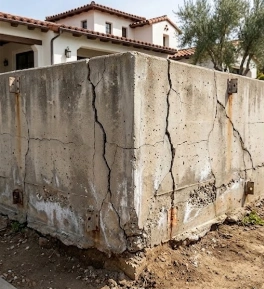
Foundations settle when supporting soil compresses, shrinks, washes away, or loses strength under the building’s weight; common causes include poorly compacted fill, clay drying, drainage problems, and loads that exceed the ground’s capacity. We recommend identifying which process is affecting your property before choosing a repair, because similar cracks develop from very different conditions.
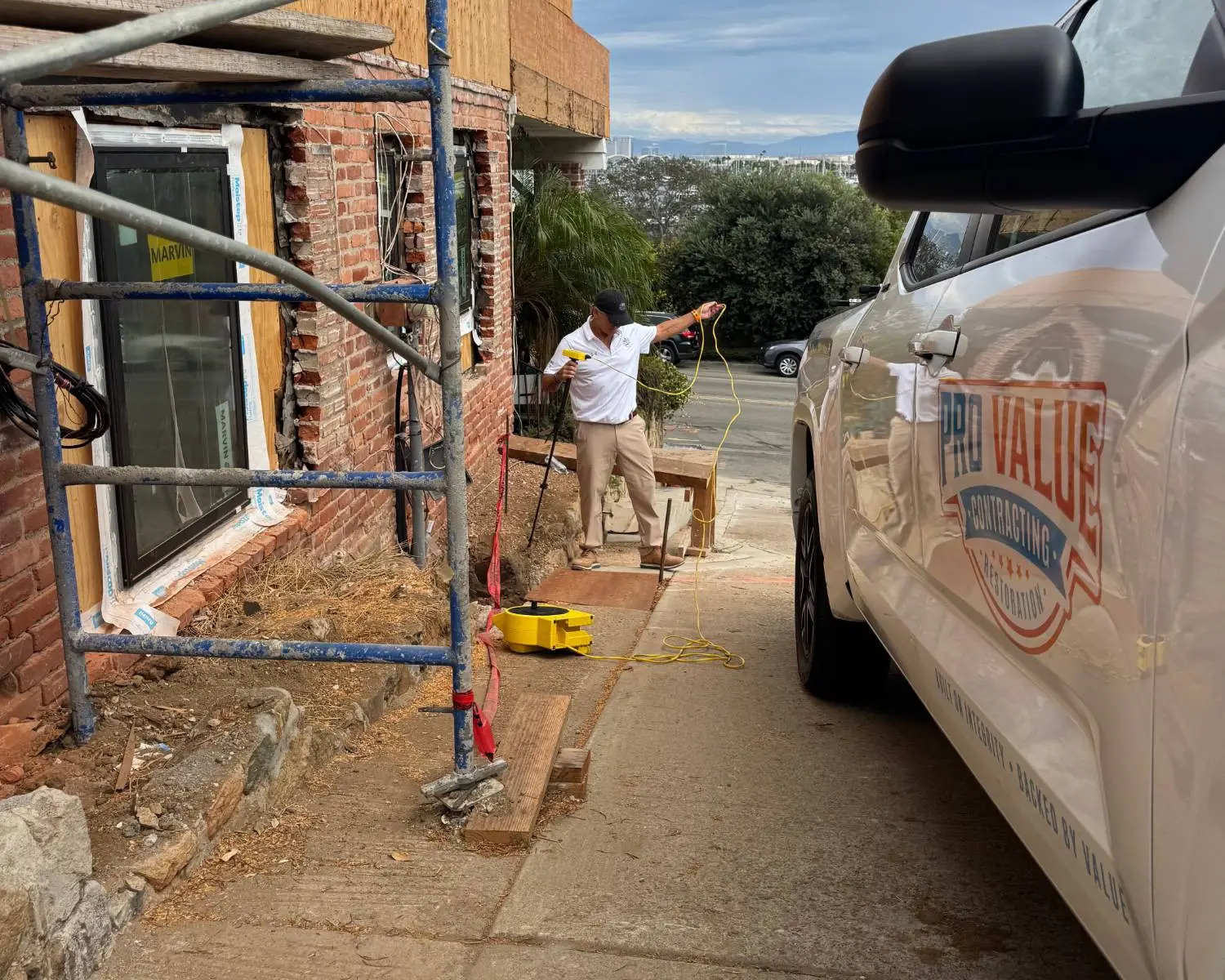
For San Diego homeowners and prospective buyers, the useful question is what connects the visible damage to the ground beneath the home. A foundation inspection brings those clues together: where movement appears, how water travels across the property, and whether the supporting soil has changed.
We also distinguish downward foundation settlement from upward heave and sideways hillside movement. Each calls for a different evaluation, and a crack alone leaves important questions unanswered.
How Do Soil Conditions and Construction Loads Cause Sinking?
Soil conditions and construction loads cause sinking when the ground compresses under weight or provides uneven support. We assess the relationship between the building’s load and the soil beneath it, including any fill placed during site preparation.
How Soil Type Affects Support Beneath a Home
Dense sand and gravel provide different support from loose sand, clay soil, or organic material such as peat. Loose grains move closer together under loading, while water within fine-grained soil influences how quickly it compresses. Peat is especially compressible because of its organic content.
We consider soil type a starting point for investigation. A property’s location alone does not establish its subsurface conditions, and neighboring homes can sit on different fill depths or natural deposits.
Why Poorly Compacted Fill Settles After Construction
Poorly compacted soil contains spaces that close as the ground becomes loaded or wetted. During construction, suitable fill needs placement in controlled layers with appropriate moisture and soil compaction. Thick, loosely placed layers leave uneven support beneath a foundation.
We recommend reviewing available grading records when fill is suspected. A home crossing the boundary between natural ground and deeper fill deserves particular attention because those areas respond differently to the same load.
How Soil Compression and Consolidation Develop Over Time
Immediate settlement develops as soil deforms during or shortly after loading. Soil consolidation is a slower process in which water escapes from saturated, fine-grained soil and its volume decreases. The time involved reflects soil permeability, drainage paths, and the thickness of the compressible layer.
We use the timing of visible changes to help distinguish these processes. Construction dates and past elevation records provide useful context, although establishing the subsurface mechanism requires geotechnical investigation in some cases.
When Foundation Design and Added Loads Exceed Soil Capacity
Foundation design determines how building weight reaches the ground. Shallow foundations distribute loads through footings near the surface; their performance relies on suitable bearing soil and adequate footing dimensions. Excessive pressure creates settlement, while a bearing-capacity failure involves a more serious loss of soil support.
We recommend a structural review before adding a second story or substantially increasing concentrated loads. The review should address both the existing foundation and the ground supporting it.
How Do Water, Drainage, and Hillside Conditions Change Foundation Support?
Water changes foundation support by altering soil volume, strength, and the movement of soil particles. On sloped San Diego properties, we also consider how runoff and hillside movement affect the ground around and beneath the home. This is a common concern on hillside lots in coastal communities such as La Jolla, Del Mar and Encinitas.
Why Expansive Clay Shrinks During Dry Periods
Expansive clay soil contracts as it loses moisture, reducing its volume beneath a foundation. When moisture returns, expansive soils swell and produce upward movement called heave. Uneven wetting or drying creates different support conditions across the same building.
We avoid assuming that every San Diego property has expansive soil. Seasonal changes in cracks, soil separation near the perimeter, and soil testing help establish whether clay shrinkage is contributing to foundation movement.
How Poor Drainage, Leaks, and Improper Grading Weaken Support
Poor drainage concentrates water where it changes the supporting ground. Saturation weakens certain soils, while flowing water carries fine particles away through soil erosion. A plumbing leak beneath a home creates a different exposure from occasional surface runoff.
We recommend checking where downspouts discharge and whether the ground directs runoff toward the building. Inadequate drainage also deserves attention at uphill sides, where water collects against the home or enters utility trenches.
How Groundwater Changes and Nearby Dewatering Affect Soil
A falling groundwater level increases the load carried by soil particles in certain saturated deposits, leading to consolidation. Nearby dewatering, which removes groundwater for construction or excavation, is one possible trigger. Rising groundwater creates other concerns, including reduced soil strength under some conditions.
We recommend documenting the timing of nearby excavation alongside new property changes. Determining whether groundwater caused movement requires subsurface information and specialist interpretation; the presence of construction next door does not establish the connection.
How Tree Roots Alter Moisture Beneath a Foundation
Tree roots draw moisture from the ground, and that drying produces shrinkage where moisture-sensitive clay is present. The effect varies with the tree’s water demand and the distribution of its roots. Roots also displace shallow paving, which is a separate mechanism.
We advise against removing a mature tree solely because a nearby wall has cracked. Changes to vegetation alter moisture conditions too, so a coordinated assessment should address the soil and the tree before removal or major root cutting.
How Lateral Hillside Movement Differs From Downward Settlement
Lateral hillside movement carries soil sideways or downslope, sometimes with a downward component. Settlement describes downward movement caused by a loss or compression of support beneath the foundation. A slope failure involves a broader ground-stability problem.
We recommend evaluating displaced retaining walls, ground cracks, and movement outside the building when hillside instability is suspected. Rapid changes, fresh slope cracking, or visible ground displacement warrant prompt professional attention and keeping people away from the affected area.
A Real Example: Hillside Movement at a La Jolla-Area Home
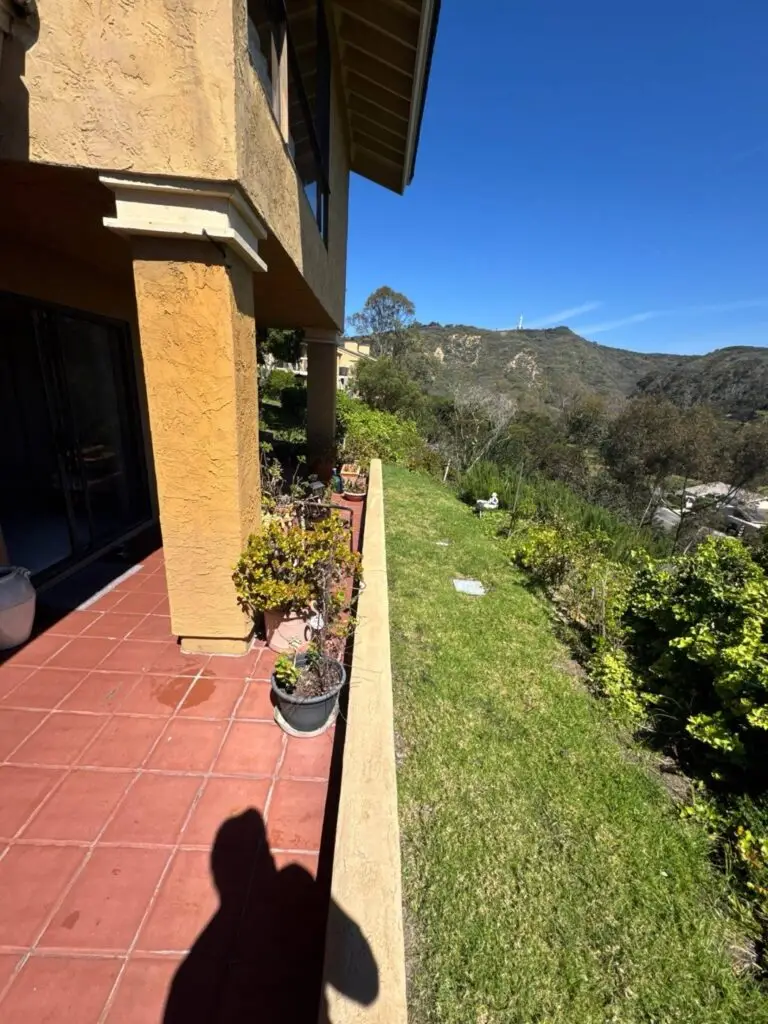
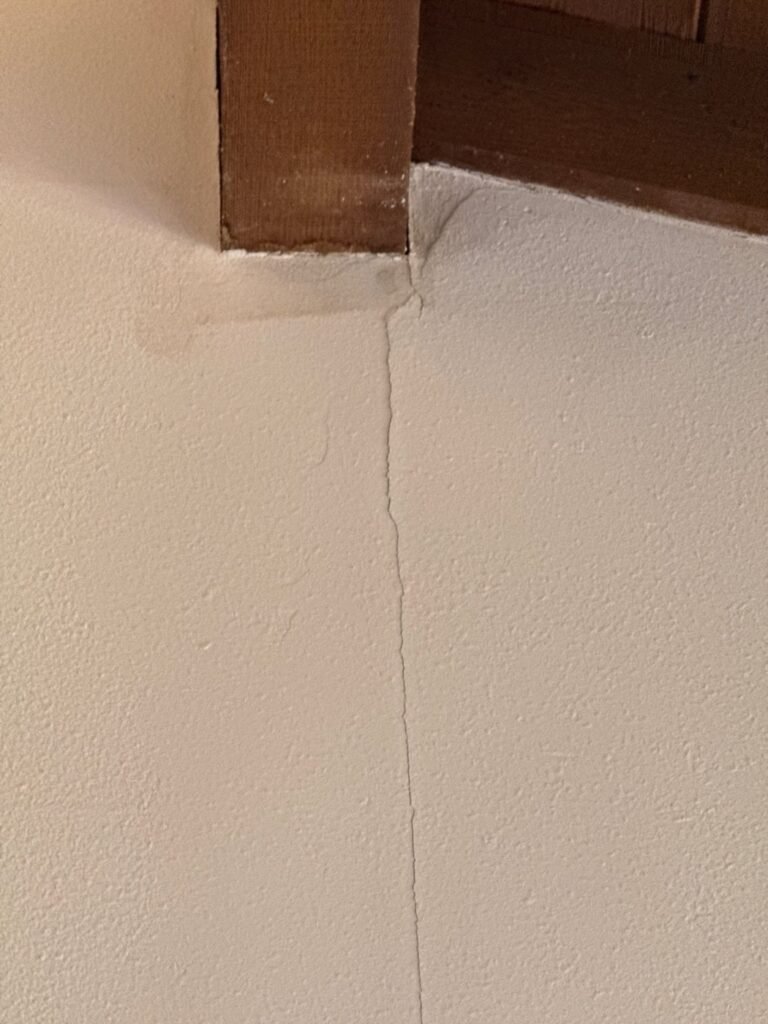
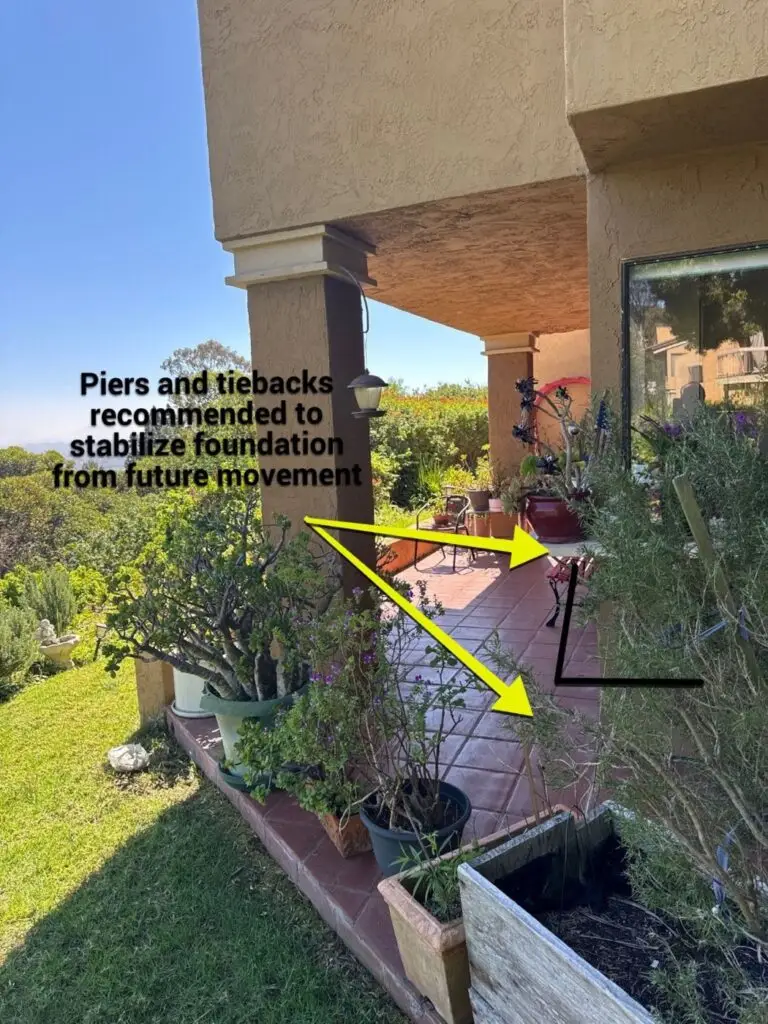
On one of our hillside inspections, a two-story home sat at the top of a steep, landscaped slope dropping toward a canyon, with Mount Soledad in view. Inside, we found a vertical crack running down the wall from the corner of a ceiling beam, on the downhill side of the house.
A single crack can mean many things, but its location mattered here: fresh cracking on the slope side of a home built at the edge of a hillside points to the ground moving downhill and settling, not ordinary drywall shrinkage. Our report documented the crack pattern and the slope conditions and recommended stabilizing the foundation along the slope side with piers and tiebacks to stop future movement. As with every SDFI report, the repair work itself goes to a licensed foundation contractor.
Which Movement Patterns and Warning Signs Matter?
Uneven or progressive movement deserves closer investigation because it distorts the structure and helps reveal where support is changing. We evaluate signs of foundation settlement as a pattern across the property.
Uniform, Differential, and Tipping Settlement
The principal types of foundation settlement describe how different parts of a building move:
- Uniform settlement: The foundation moves downward by roughly the same amount.
- Differential settlement: Parts of the foundation move by different amounts.
- Tipping settlement: One side settles more, creating an overall tilt.
We assess the distortion associated with the movement as well as its extent. Uniform settlement produces less internal distortion, although substantial downward movement still affects utilities and connections to adjacent structures.
What Cracks, Sticking Doors, and Uneven Floors Can Indicate
Cracks in walls, drywall cracks near openings, and stair-step cracks in masonry indicate where materials have experienced stress. Sticking doors and uneven floors add context when their locations align with a broader movement pattern. Moisture-related wood movement and framing defects also produce some of these symptoms.
We look for relationships between observations. Sloping floors paired with displaced foundation cracks deserve a different assessment from an isolated finish crack; crack direction or width alone does not establish the cause of foundation damage.
Why Changes Over Time Matter More Than a Single Crack
A dated record helps separate stable damage from active movement. Photographs with a ruler, notes about door operation, and repeat measurements from consistent reference points document change. Seasonal recurrence also provides clues about moisture-sensitive ground.
We recommend recording when a symptom first appeared and whether it followed rain, a leak, or nearby work. Significant structural damage requires prompt evaluation without waiting for a monitoring period to end.
How Does an Inspection Identify the Underlying Cause?
A foundation inspection identifies likely causes by connecting structural symptoms with drainage, ground conditions, and the property’s history. We also explain where additional investigation is needed to establish what lies below the surface.
What Inspectors Evaluate Around the Foundation and Property
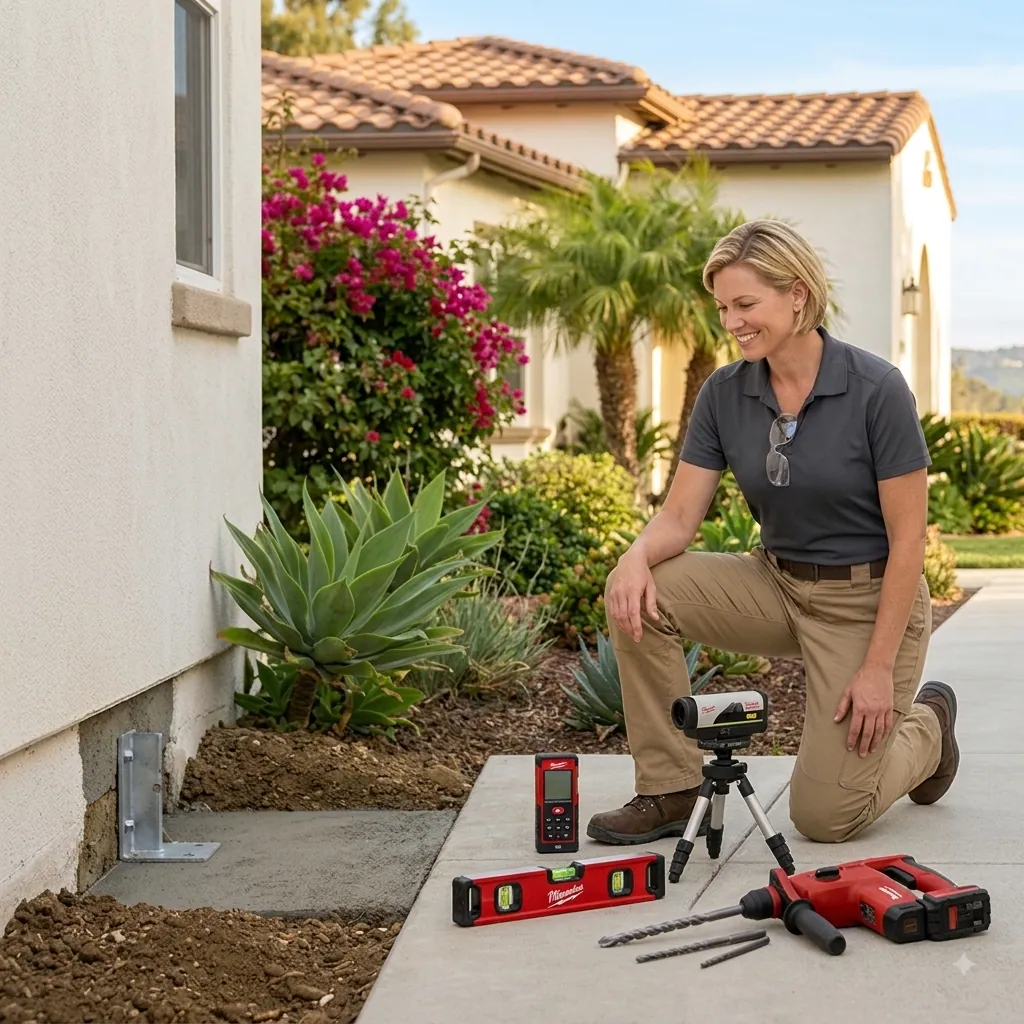
A useful evaluation considers the foundation’s visible condition together with the surrounding site. Relevant observations include crack displacement, floor slopes, drainage paths, vegetation, and signs of water entry. Access conditions affect which portions of the foundation are visible.
We also recommend sharing previous reports and information about additions or plumbing repairs. A crack beside a recently leaking drain presents a different line of investigation from movement extending across a hillside lot.
When Soil Testing or Structural Engineering Input Is Needed
Soil testing is appropriate when the ground’s composition or behavior controls the repair decision. A geotechnical professional evaluates conditions such as compressible fill, expansive clay, groundwater, and slope stability. A structural engineer evaluates load paths and designs structural repairs where needed.
We recommend specialist input when movement is substantial, its cause remains unclear, or a proposed repair changes how loads reach the soil. A visual inspection cannot establish deep bearing conditions or provide a complete slope-stability analysis.
How Written Findings Guide Monitoring and Repair Planning
Written findings create a usable record of observed conditions and the recommended next steps. At San Diego Foundation Inspection, our detailed written reports help homeowners understand their foundation evaluation and make informed property decisions. Our report explains what we found and which repair approaches fit those findings; when repair work is needed, we refer you to a licensed foundation contractor.
A useful report distinguishes visible evidence from issues requiring further investigation. We recommend retaining it with dated photographs and any engineering documents so future evaluations have a consistent reference.
Which Repairs and Preventive Measures Address the Cause?
Effective foundation settlement repair addresses the mechanism responsible for lost support. We recommend matching drainage work, structural support, or soil improvement to documented conditions before selecting a repair system.
When Drainage Corrections and Moisture Management May Help
Drainage corrections address settlement risks when concentrated water is eroding soil or changing its moisture condition. Appropriate work includes repairing leaks, correcting discharge locations, and improving grading where feasible. Water needs a suitable outlet that avoids creating problems elsewhere.
We recommend a property-specific moisture plan for expansive soils. Heavy watering beside a foundation creates uneven wetting, and drainage improvements do not automatically restore support already lost beneath a footing.
When Underpinning and Piers May Be Appropriate
Underpinning extends or strengthens foundation support by transferring loads to more suitable material. Helical piers use screw-shaped plates installed into the ground, while push piers are driven in sections using hydraulic equipment. Steel piers and concrete piers encompass different systems with distinct design requirements.
We recommend engineering-led selection based on soil conditions, required loads, access, and foundation construction. Installation depth and capacity need verification, and any proposed lifting requires assessment of the existing building and connected utilities.
Where Grouting and Slab Lifting Fit, and Their Limits
Grouting fills voids or improves selected ground conditions using an injected material. Mudjacking raises certain settled concrete slabs by pumping a cement-based mixture beneath them; other slab-lifting systems use expanding foam. These methods serve different purposes from deep foundation support.
We recommend identifying whether the affected concrete is a floor slab, exterior paving, or a load-bearing foundation component. Lifting a slab leaves unresolved ground movement in place when the underlying cause remains active.
How Soil Improvement and Better Site Preparation Reduce Risk
Soil replacement removes unsuitable material and substitutes properly selected, compacted fill. Controlled soil compaction reduces loose spaces before construction, while other soil-improvement methods target conditions deeper underground. The appropriate method follows the geotechnical findings.
We recommend documenting fill placement and testing during construction or major reconstruction. Excavation near an existing footing requires careful planning because removing supporting ground introduces a separate stability risk.
Identify the Cause Before Choosing a Repair
A foundation inspection gives you a practical basis for choosing foundation settlement repair by connecting the damage with its likely cause. We recommend resolving questions about water, soil, and movement direction before committing to a repair proposal.
Our evaluations at San Diego Foundation Inspection include clear explanations, detailed written reports, and repair recommendations based on the findings. If you have noticed changing cracks or uneven floors, schedule a foundation inspection in San Diego or call (888) 299-9633. For homes on a raised foundation, our crawl space inspection covers the piers, posts and moisture under the floor.